Scroll Trellis, LLC
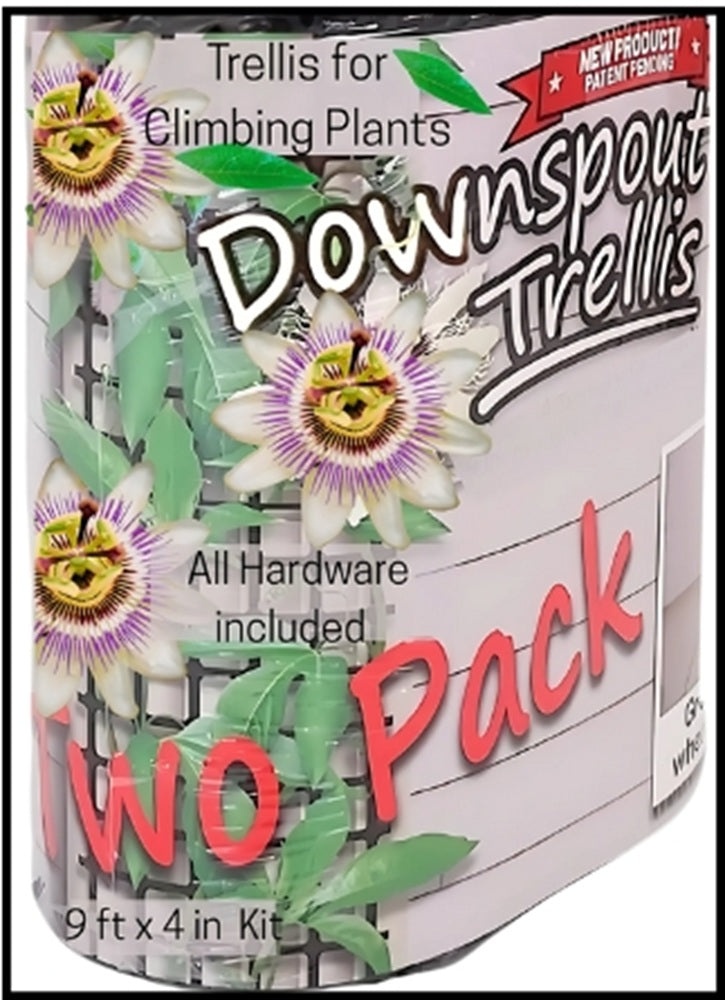
Downspout Trellis for Clematis and Climbing Plants, 9 ft Tall x 4 in Wide
Downspout Trellis for Clematis and Climbing Plants, 9 ft Tall x 4 in Wide
Couldn't load pickup availability

Why Gardeners Choose Scroll Trellis
✓ Designed around how clematis and other climbing vines actually climb
✓ Installs in about 20 minutes
✓ Slim 4-inch profile fits where ordinary trellises won't
✓ Creates one continuous 9-foot climbing surface
✓ Maintains airflow behind your vines
✓ Supports vines up to 50 pounds
Description
Hide an ordinary downspout behind a spectacular flowering vine. Scroll Trellis transforms an overlooked downspout into a vertical growing space with a slim, continuous 9-foot climbing surface. Designed specifically for standard residential downspouts, the offset mounting system positions the mesh in front of the downspout, leaving space behind the vine for airflow.
The UV-resistant black mesh can be trimmed with ordinary scissors if a shorter height is needed. Each kit includes everything needed to mount one trellis to a standard residential downspout.
What’s included
- 1 roll of 9-foot UV-resistant black HDPE mesh (ships rolled and unrolls flat)
- 3 black composite mounting brackets
- 3 zinc-coated self-drilling screws for standard residential 2x3 and 3x4 metal downspouts
- 3 stainless steel cable ties to secure the trellis
- Illustrated installation guide with tips for clematis and other climbing vines
Installation & Mounting
-
Most gardeners complete installation in about 20 minutes using a drill/driver and household scissors.

Step 1: Measure downspout
Measure the front face of your downspout where you plan to mount the trellis.Step 2: Prep the kit
Untie the mesh and remove the loose black composite block, the small bag of button head fasteners, and the three stainless steel zip ties. Set aside.Step 3: Mount the top bracket
Attach the top composite block to the front of the downspout just below the gutter seam. Position it so the two button head fasteners press against the downspout.
The included screw is self-drilling, so no pilot hole is needed.Step 4: Attach and tension the mesh
Unroll the mesh. On the second composite block, remove the long screw and button head fasteners.
Insert the fasteners through the mesh and back into the block at your desired height.
Start the long screw lightly, pull the mesh straight, then tighten the block against the downspout and fully drive the screw.Trim any excess mesh at the bottom with scissors.
Step 5: Add mid support
Attach the third composite block to the mesh with button head fasteners, then secure it to the downspout with the screw.Step 6: Secure with zip ties
Lace one stainless steel zip tie through the mesh across the front of each block, wrap around the downspout, and tighten to lock everything in place.
Will it Fit My Downspout?

- Fits standard residential 2×3 and 3×4 metal or vinyl downspouts
- 108 inches (9 feet) tall and 4 inches wide
- Can be trimmed shorter with ordinary scissors if needed
- Surface-mount design keeps vines in front of the downspout, not against it
- UV-resistant black HDPE mesh built for years of outdoor use
- Perfect for clematis, mandevilla, morning glory, honeysuckle, passion vine, and other climbing plants
Tips for Clematis & Vines

- Choose a vine suited to your sunlight conditions and USDA hardiness zone.
- For clematis, medium-vigor varieties (about 6–10 feet tall and 3–4 feet wide) are an excellent match for a standard residential downspout.
- Keep roots moist with mulch, or low-growing companion plants while allowing the vine to climb into full sun.
- Gently guide new growth onto the mesh as needed. Once the vine makes contact, clematis petioles, tendrils, or twining stems can use the narrow mesh to continue climbing.
- If your vine reaches the top, lightly pinch or prune the growing tips to encourage fuller, bushier growth.
No Downspout? Choose the Right Trellis.
The Downspout Trellis is designed specifically to mount to the front of standard residential rain gutter downspouts.
If you're growing climbing plants on deck posts, porch columns, mailbox posts, fences, pergolas, or siding, the Scroll Trellis Narrow Trellis is the better choice. It uses the same slim HDPE mesh and plant-friendly design but mounts to flat surfaces instead of downspouts.
Comparing trellis options? See how Scroll Trellis compares with other common trellis designs on our “Why Scroll Trellis vs Other Trellises” page.
Choosing the right trellis helps your climbing plants thrive while giving you the cleanest, most attractive installation.
Why Won't My Clematis Climb?
Many gardeners assume a struggling clematis needs fertilizer, pruning, or a different variety.
Often, the problem is the support.
Clematis climbs by wrapping its tiny leaf stems (called petioles) around narrow supports. Thick posts, wide boards, and many decorative trellises can be too large or too smooth for young vines to grip.
Once you understand how clematis climbs, choosing the right support becomes much easier.
Learn why some supports work better than others:
→ Why Won't My Clematis Climb?
Not sure which trellis is right for your space?
Compare the Downspout Trellis and Narrow Trellis to find the best fit for your project.
"Why Scroll Trellis vs Other Trellises" page
FAQs
Q: Does the trellis mount to the downspout or the wall?
The Downspout Trellis mounts directly to the exterior of a standard residential downspout using offset brackets. The mesh supports the vines in front of the downspout while maintaining airflow behind the foliage.
Q: Will it fit standard residential downspouts?
A: Yes. It fits most common residential downspout sizes, including 2x3 and 3x4 profiles. The trellis mounts to the front face of the downspout rather than wrapping around it.
Q: Will the trellis block water flow or affect drainage?
A: No. The trellis attaches to the outside of the downspout and does not interfere with internal water flow or gutter function.
Q: Is the trellis one piece or modular?
A: The Downspout Trellis uses one continuous 9-foot HDPE mesh panel that installs as a single climbing surface on one downspout. It can also be trimmed shorter with ordinary scissors if needed.

Q: Is a 4-inch wide trellis enough for climbing plants?
A: Yes. Vines climb upward on the mesh and naturally spread outward as they grow, creating lush foliage coverage while the support remains slim and unobtrusive.

Q: What plants work best with the Downspout Trellis?
A: Suitable for clematis, mandevilla, morning glory, honeysuckle, passion flower, and other climbing vines that attach by leaf petioles, tendrils, or twining stems.

Q: Does installation require drilling?
A: Yes. The included self-drilling screws attach the offset mounting blocks directly to the downspout, so the installation creates small mounting holes. No pilot holes, digging, concrete, or ground stakes are required.
Q: Will this put holes in my downspout?
A: Yes. Installation uses the included self-drilling screws to attach the mounting blocks directly to the front of the downspout. The screws create small mounting holes in the downspout. The trellis remains on the exterior and does not block the downspout's internal water channel.
Why Gardeners Choose Scroll Trellis
✓ Designed around how clematis and other climbing vines actually climb
✓ Installs in about 20 minutes
✓ Slim 4-inch profile fits where ordinary trellises won't
✓ Creates one continuous 9-foot climbing surface
✓ Maintains airflow behind your vines
✓ Supports vines up to 50 pounds
-
Most gardeners complete installation in about 20 minutes using a drill/driver and household scissors.
Step 1: Measure downspout
Measure the front face of your downspout where you plan to mount the trellis.Step 2: Prep the kit
Untie the mesh and remove the loose black composite block, the small bag of button head fasteners, and the three stainless steel zip ties. Set aside.Step 3: Mount the top bracket
Attach the top composite block to the front of the downspout just below the gutter seam. Position it so the two button head fasteners press against the downspout.
The included screw is self-drilling, so no pilot hole is needed.Step 4: Attach and tension the mesh
Unroll the mesh. On the second composite block, remove the long screw and button head fasteners.
Insert the fasteners through the mesh and back into the block at your desired height.
Start the long screw lightly, pull the mesh straight, then tighten the block against the downspout and fully drive the screw.Trim any excess mesh at the bottom with scissors.
Step 5: Add mid support
Attach the third composite block to the mesh with button head fasteners, then secure it to the downspout with the screw.Step 6: Secure with zip ties
Lace one stainless steel zip tie through the mesh across the front of each block, wrap around the downspout, and tighten to lock everything in place.
- Fits standard residential 2×3 and 3×4 metal or vinyl downspouts
- 108 inches (9 feet) tall and 4 inches wide
- Can be trimmed shorter with ordinary scissors if needed
- Surface-mount design keeps vines in front of the downspout, not against it
- UV-resistant black HDPE mesh built for years of outdoor use
- Perfect for clematis, mandevilla, morning glory, honeysuckle, passion vine, and other climbing plants
- Choose a vine suited to your sunlight conditions and USDA hardiness zone.
- For clematis, medium-vigor varieties (about 6–10 feet tall and 3–4 feet wide) are an excellent match for a standard residential downspout.
- Keep roots moist with mulch, or low-growing companion plants while allowing the vine to climb into full sun.
- Gently guide new growth onto the mesh as needed. Once the vine makes contact, clematis petioles, tendrils, or twining stems can use the narrow mesh to continue climbing.
- If your vine reaches the top, lightly pinch or prune the growing tips to encourage fuller, bushier growth.
Q: Does the trellis mount to the downspout or the wall?
The Downspout Trellis mounts directly to the exterior of a standard residential downspout using offset brackets. The mesh supports the vines in front of the downspout while maintaining airflow behind the foliage.
Q: Will it fit standard residential downspouts?
A: Yes. It fits most common residential downspout sizes, including 2x3 and 3x4 profiles. The trellis mounts to the front face of the downspout rather than wrapping around it.
Q: Will the trellis block water flow or affect drainage?
A: No. The trellis attaches to the outside of the downspout and does not interfere with internal water flow or gutter function.
Q: Is the trellis one piece or modular?
A: The Downspout Trellis uses one continuous 9-foot HDPE mesh panel that installs as a single climbing surface on one downspout. It can also be trimmed shorter with ordinary scissors if needed.
Q: Is a 4-inch wide trellis enough for climbing plants?
A: Yes. Vines climb upward on the mesh and naturally spread outward as they grow, creating lush foliage coverage while the support remains slim and unobtrusive.
Q: What plants work best with the Downspout Trellis?
A: Suitable for clematis, mandevilla, morning glory, honeysuckle, passion flower, and other climbing vines that attach by leaf petioles, tendrils, or twining stems.
Q: Does installation require drilling?
A: Yes. The included self-drilling screws attach the offset mounting blocks directly to the downspout, so the installation creates small mounting holes. No pilot holes, digging, concrete, or ground stakes are required.
Q: Will this put holes in my downspout?
A: Yes. Installation uses the included self-drilling screws to attach the mounting blocks directly to the front of the downspout. The screws create small mounting holes in the downspout. The trellis remains on the exterior and does not block the downspout's internal water channel.